
|
Author: Sandy Vaile This article was first published on the Margie Lawson blog on 31/05/22. The average attention span of readers is decreasing (just 8 seconds online, according to research by San Jose University), which is why it’s so important for authors to engage them the moment they step onto the page, so as to speak. Point of View (POV) is one of the techniques we can use to immerse readers in our story world, but it is also a frequently misconstrued and misused concept. It causes all kinds of angst in aspiring authors, who often choose (or accidentally fall into) the omniscient POV, with the misguided belief it will provide more storytelling flexibility. But like every story choice, there are pros and cons. While every type of POV is useful in certain circumstances, I believe mastering a limited POV (particularly when you’re new to fiction writing) will make you a better writer in the long run. Wow, that’s a bold claim! I can already hear the cries of indignation from those who love the omniscient POV. I’m not saying one is better than the other, merely singing the educational benefits of mastering a limited POV. Give me a minute to explain. 
0 Comments
Every second person I speak to believes they’ve “got a novel in them”. It’s getting it out and onto the page that’s the tricky part! Only about 3% of people who actually start writing a book, will ever finish it. Fewer still end up with a story that works. So, how can you be in the minority of fiction authors who end up with a story that hits all the marks publishers and readers are looking for? In my experience, it doesn’t matter when or how much you like to plan your stories, so long as you nail four critical aspects. It’s all about writing with purpose. Having a fabulous idea, is just the beginning. The hard part is moulding that idea into a living, breathing story that captures the imagination of readers, plucks at their heart strings and lures them towards ‘the end’.  Authors usually come unstuck byAuthor: Sandy Vaile Originally published by Romance Writers Australia Hearts Talk ezine May 2022 . Why POV is important to your novelPoint of View (POV) characters determine the focus of a story, which is why the decision shouldn’t be taken lightly. It’s not just about who is telling the story but how they are the best character to convey information in an interesting and believable way. Whether you decide to use first-person, third-person limited or omniscient POV, you will still have to decide which character is going to communicate the story to readers. But how? 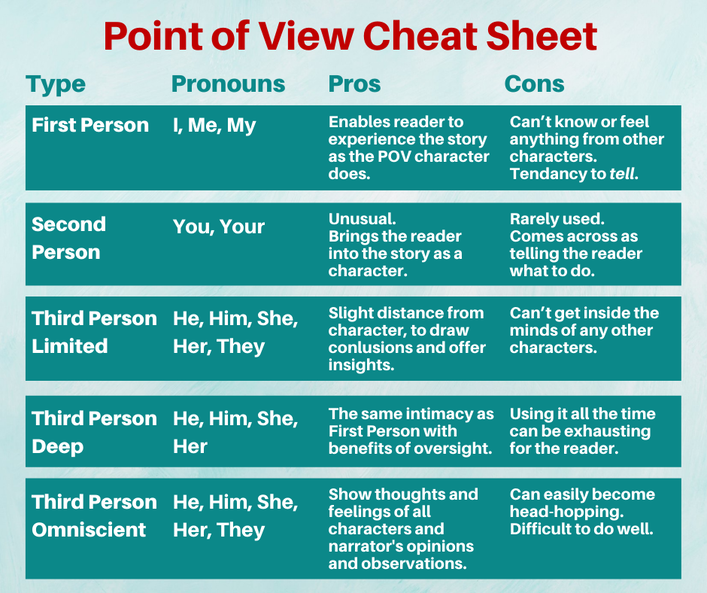 Author: Sandy Vaile Originally published on the Romance Writers of Australia blog June 2022. Why limited third person POV is the most commonThere are various options when it comes to choosing the right Point of View (POV) for your romance story and they each have benefits and drawbacks.
But why?  The best way to add more tension to a storyRegardless of the length or genre of a story, creating tension is essential to holding readers' attention. But what is the best way to add more tension to a story? Often I see aspiring authors withholding information in an effort to be vague and cryptic, which only serves to frustrate readers instead of engage them. Perhaps surprisingly, it is the act of proving information to the reader — be it in the right place and quantity — that makes them curious enough to continue reading. The whole point of storytelling is to share tales and you need people to read the whole thing in order to get your point and fully enjoy what you’ve created, but not even having a best-selling book provides this guarantee. Data collected by Kobo from more than 21m users, showed that readers were keener to finish Casey Kelleher’s self-published thriller Rotten to the Core than many award-winning and best-selling novels.  |
Fearless ProseEmpowering aspiring authors to confidently write novels they're proud to publish Categories
All
Archives
December 2023
|
 RSS Feed
© Sandy Vaile 2012-2024 |
Contact and Privacy Policy - About Sandy |